


A thriving sex life — what we all crave, yet often don’t get. We blame busy schedules, stress and time constraints. All completely valid. However, there’s one factor that is often overlooked — and it can absolutely make or break your sex life: sleep.
The problem is, we’re simply not getting enough. And the issue becomes even more noticeable in the warmer months. Research commissioned by Shark found three in five couples struggle to sleep well during summer, while 59% say they have skipped or would skip bedtime intimacy due to heat and poor sleep.
Let’s unpack this together – both the biology behind sleeplessness and our sex life, and the practical, actionable and achievable solutions you and your partner can implement, starting tonight.

How Lack of Sleep Impacts Your Sex Life
More than ‘just not being in the mood’, lack of sleep biologically hardwires us to avoid having sex.
Elevated levels of cortisol, our primary stress hormone, mean we are more reactive, impatient and mentally drained. Minor concerns become major catastrophes, and we are prone to irriation, arguments and disagreement – hardly the conditions for making love.
At the same time, sleep loss can reduce levels of oxytocin, the “love hormone.” Oxytocin plays a key role in affection, trust and emotional closeness between partners. When levels drop, feelings of connection can weaken.
Lastly, lack of sleep impairs cognition – our prefrontal cortex is impaired, leading to difficulties focusing, making decisions and regulating our emotions. Again, here, we are biologically hardwired against being intimate, and rather, we look for opportunities to validate our stress, as a confirmation bias.
Often, partners are in the firing line – day and night.
Why It Gets Worse in Summer
The research by Shark also found 4 in 5 couples sleep apart and they spend an average of 92 nights apart – highly likely to be the warm summer nights, when sleeping together is even more difficult.
Not just personal preference, to produce our key sleepiness hormone, melatonin, we require a 0.5-1 degree drop in core body temperature. Without this drop, we do not receive the biological signals to fall asleep.
Similarly, through the night, if we overheat, we see spikes in cortisol, leading to lighter, broken and unrefreshing sleep.
Cooling bedding isn’t enough – especially when stressed, we can see sharp temperature elevations around 3am, 4am, 5am, and if our bedroom temperature is also warm, we don’t have the capacity to cool down.
Conversely, a cool room, if we overheat, allows heat to dissipate, and our core body temperature to cool down too – enabling us to return to sleep with greater ease.
For couples, it’s even more complex – we often have different core body temperature levels, meaning one partner can be warm, the other, cool. As a result, a cool room becomes even more important, in the case that one does overheat and requires rapid cooling.
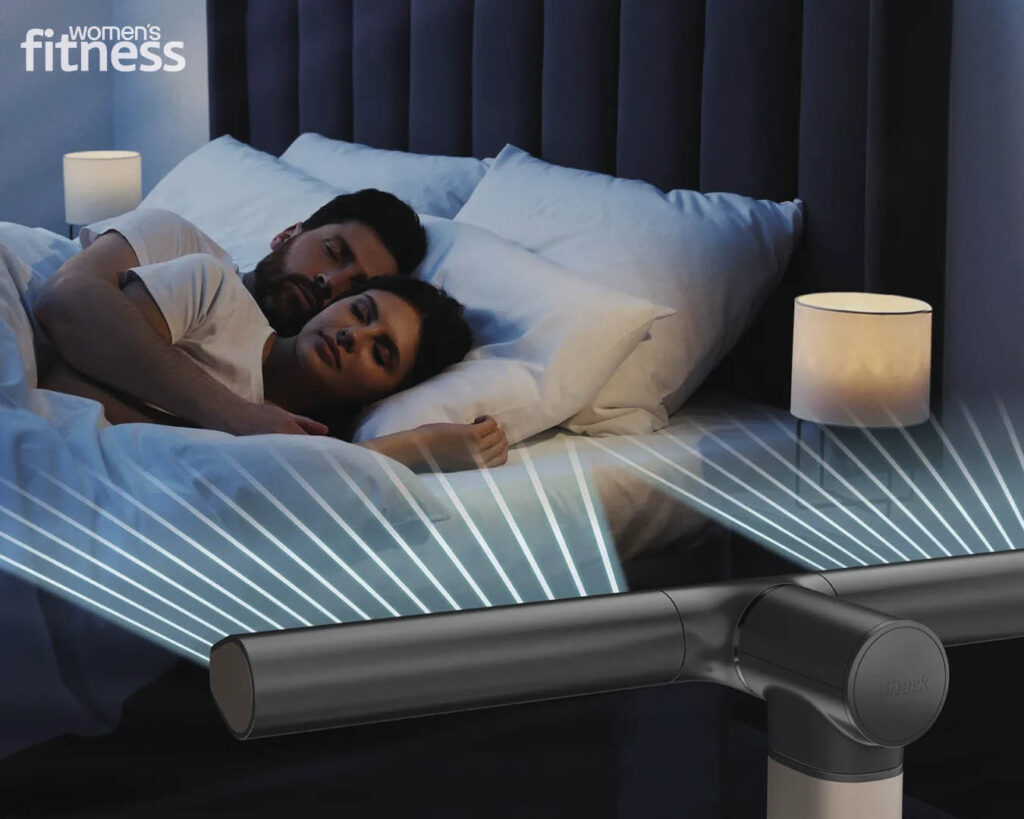
How to stay cool – and connected – all night long
Use a fan – not air con
Air con seems the easy solution. However – aware of the expense and current budget considerations for almost all couples, keeping air con all night could be a hidden source of stress – even if it’s not said aloud.
A fan though? Inexpensive and effective – perfect. That said, the fan must be quiet and evenly distribute airflow, as to ensure sleep quality for both partners. Highly recommended here is Shark’s TurboBlade fan, (https://sharkclean.com.au/) specifically designed to distribute airflow evenly, and provide a subtle background hum.
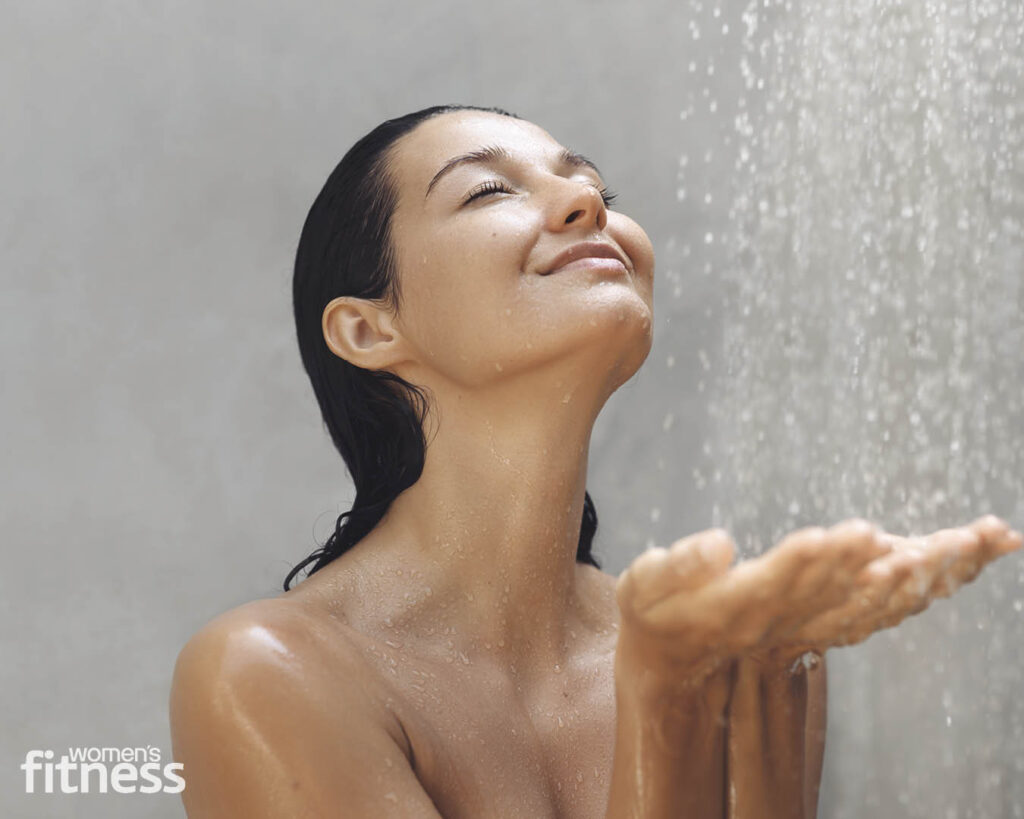
Take a warm evening shower
Sounds counterintuitive, but stay with me – a warm shower before bed heats you up, yes, however, when you move into the cooler bathroom, you rapidly cool down. This is the exact cue for melatonin production, sending a biological signal that it’s time to sleep.
Avoid thermogenic activities 3 hours within bed: eating and exercise
Large meals and vigorous exercise increase thermogenesis, meaning the body produces more heat. When this occurs close to bedtime, it can delay the body’s ability to cool down and fall asleep.
Finishing intense exercise and larger meals at least three hours before bed can help the body prepare more effectively for sleep. The only exception here? Sex. Even if vigorous, because of the potent release of stress reducing hormones, while it does heat us up, the benefits outweigh the negatives – so don’t worry at all about that exercise.
Improving your sex life doesn’t need to be complex.
Start with sleep. When the brain and body are properly restored, stress falls, connection deepens and intimacy becomes effortless again. It’s not luck — it’s biology. And prioritising sleep may be one of the smartest relationship strategies you can make.
Written by Olivia Arezzolo, Australia’s Leading Sleep Expert and Keynote Speaker. With 500+ media features on The Today Show, The Morning Show, News.com.au, Body and Soul and more, 300+ keynotes with IKEA, Samsung, Audible, Medibank and more, and an bestselling book in 10 countries; Olivia is on a mission to help you use sleep as a strategy: for performance, leadership and longevity. Connect with Olivia on instagram – @oliviaarezzolo


